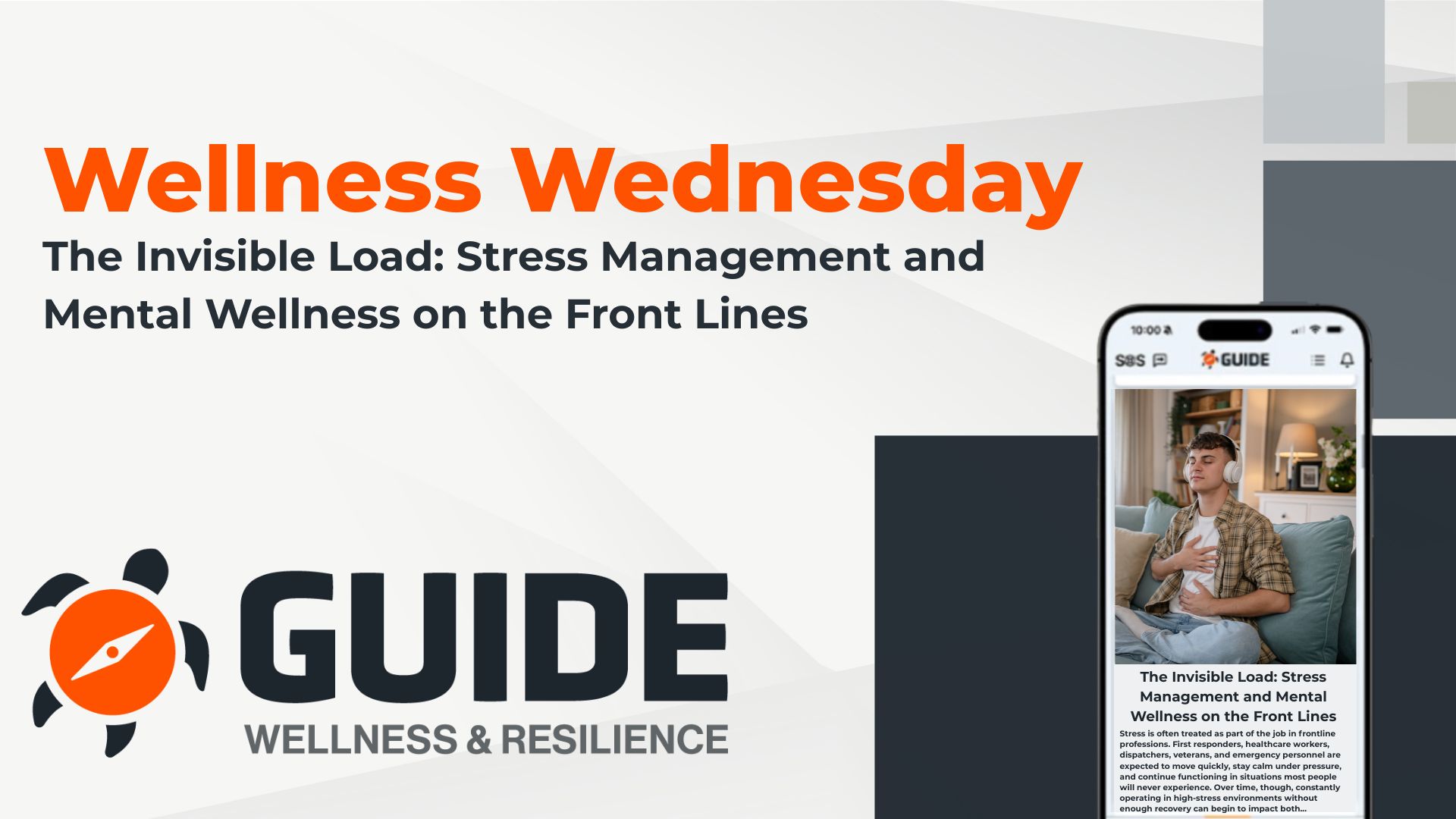
Stress is often treated as part of the job in frontline professions. First responders, healthcare workers, dispatchers, veterans, and emergency personnel are expected to move quickly, stay calm under pressure, and continue functioning in situations most people will never experience. Over time, though, constantly operating in high-stress environments without enough recovery can begin to impact both mental and physical health.
At The GUIDE App, we believe mental wellness should be viewed as part of operational readiness. A responder who is emotionally exhausted, mentally overloaded, or chronically stressed cannot perform at their highest level long-term. Supporting mental resilience is not about stepping away from the mission. It is about sustaining the person behind the badge so they can continue showing up safely and effectively.
Chronic Stress and the Nervous System
The human body is designed to respond to stress during emergencies. When a threat appears, the nervous system activates the “fight or flight” response, releasing stress hormones like adrenaline and cortisol to increase awareness, reaction time, and physical readiness. In short bursts, this system is protective and necessary.
The problem begins when the body never fully returns to baseline.
For many frontline professionals, stress becomes continuous. Long shifts, trauma exposure, staffing shortages, interrupted sleep, and emotional pressure can keep the nervous system activated for hours or even days at a time. Research has shown that chronic stress can contribute to inflammation, anxiety, fatigue, cardiovascular strain, difficulty concentrating, and sleep disruption.
Over time, many responders begin to feel stuck in survival mode. Even after the shift ends, the body may still feel tense and alert. This is why some people experience the feeling of being completely exhausted while also being unable to fully relax or sleep.
Emotional Fatigue and Burnout
One of the most overlooked realities of frontline work is emotional fatigue.
First responders and healthcare professionals are repeatedly exposed to trauma, grief, conflict, and high-pressure situations while still being expected to continue functioning professionally. In many cases, there is little time to process difficult calls before the next emergency begins.
Eventually, that emotional overload starts to build.
Emotional fatigue can appear in subtle ways at first. A responder may become more irritable, emotionally detached, mentally drained, or disconnected from family and coworkers. Some begin losing patience more easily or notice they no longer feel emotionally present outside of work.
This does not happen because someone is weak. It happens because the nervous system has been under constant strain without enough recovery and emotional processing.
According to the Substance Abuse and Mental Health Services Administration, approximately 30% of first responders develop behavioral health conditions such as depression or PTSD compared to roughly 20% in the general population.
Burnout is often treated as normal within frontline culture, but constantly operating in survival mode without recovery eventually impacts both performance and overall well-being.
PTSD Awareness and Secondary Trauma
Post-traumatic stress disorder is often associated with military combat, but frontline professionals also experience repeated exposure to traumatic events throughout their careers.
PTSD can develop after witnessing severe injuries, fatalities, violence, or emotionally distressing situations over long periods of time. Symptoms may include hyper-vigilance, intrusive thoughts, emotional numbness, sleep disruption, anxiety, irritability, and difficulty concentrating.
There is also growing recognition around secondary traumatic stress, which refers to the emotional impact of repeatedly witnessing the trauma of others. Even when responders appear calm externally, the brain and body may still be carrying those experiences internally.
One of the biggest challenges surrounding PTSD awareness is stigma. Many responders hesitate to seek support because they fear judgment, appearing weak, or negatively affecting their careers.
Acknowledging stress and trauma early is important because untreated emotional overload often worsens over time. Mental wellness conversations are becoming increasingly important across first responder and healthcare communities because awareness creates opportunities for prevention and support before someone reaches a breaking point.
Breathwork and Nervous System Recovery
One of the simplest but most effective tools for stress management is controlled breathing.
When the nervous system is activated, breathing often becomes shallow and rapid. This signals the body to remain alert. Slow, controlled breathing works in the opposite direction by activating the parasympathetic nervous system, which helps the body shift into recovery mode.
Research has shown that intentional breathing practices can help lower heart rate, reduce physical tension, improve emotional regulation, and support stress recovery.
Many tactical professionals use breathing techniques because they are practical and accessible during or after stressful situations. One common method is box breathing, which involves inhaling for four seconds, holding for four seconds, exhaling for four seconds, and holding again for four seconds before repeating the cycle.
Even sixty seconds of controlled breathing can help interrupt the stress response and create a sense of calm during high-pressure moments.
Building Mental Resilience
Mental resilience is often misunderstood as emotional toughness or the ability to suppress stress. In reality, resilience is the ability to recover, adapt, and continue functioning while still acknowledging the realities of what the body and mind are experiencing.
Strong mental resilience does not mean someone never struggles. It means they have tools, routines, and support systems that help them manage stress more effectively over time.
Research surrounding resilience training in law enforcement and emergency response environments has shown that preventative wellness practices, mindfulness techniques, breathing exercises, peer support, and recovery strategies may improve emotional regulation and reduce long-term stress-related health risks.
Resilience is often built through consistent daily habits rather than dramatic changes. Sleep, movement, hydration, recovery routines, social support, and emotional awareness all contribute to long-term sustainability in frontline professions.
Why Decompression Routines Matter
One of the biggest challenges for frontline workers is transitioning out of work mode once the shift ends.
Many responders physically leave work, but mentally remain stuck in operational mode for hours afterward. Without intentional decompression, the nervous system may continue functioning as if the threat environment is still active.
Simple routines can help create separation between work life and home life. Some responders take a short walk before entering the house, shower immediately after shift, stretch tight muscles, listen to calming music during the drive home, or spend a few quiet minutes breathing before interacting with family.
These routines may seem small, but they help communicate safety to the brain and body after prolonged stress exposure.
Decompression is not about avoiding responsibility or disconnecting from the profession. It is about allowing the nervous system enough recovery so responders can continue functioning effectively both on and off duty.
Wellness Is Part of Operational Readiness
Mental wellness directly affects performance, decision-making, communication, focus, and emotional regulation. Supporting recovery is not separate from operational readiness. It is part of it.
Frontline professionals spend their careers protecting others. But sustainable service also requires protecting the person carrying the responsibility every day.
At The GUIDE App, our mission is to help frontline professionals build realistic wellness strategies that support both performance and long-term resilience. Because protecting the mission starts with protecting the people behind it.