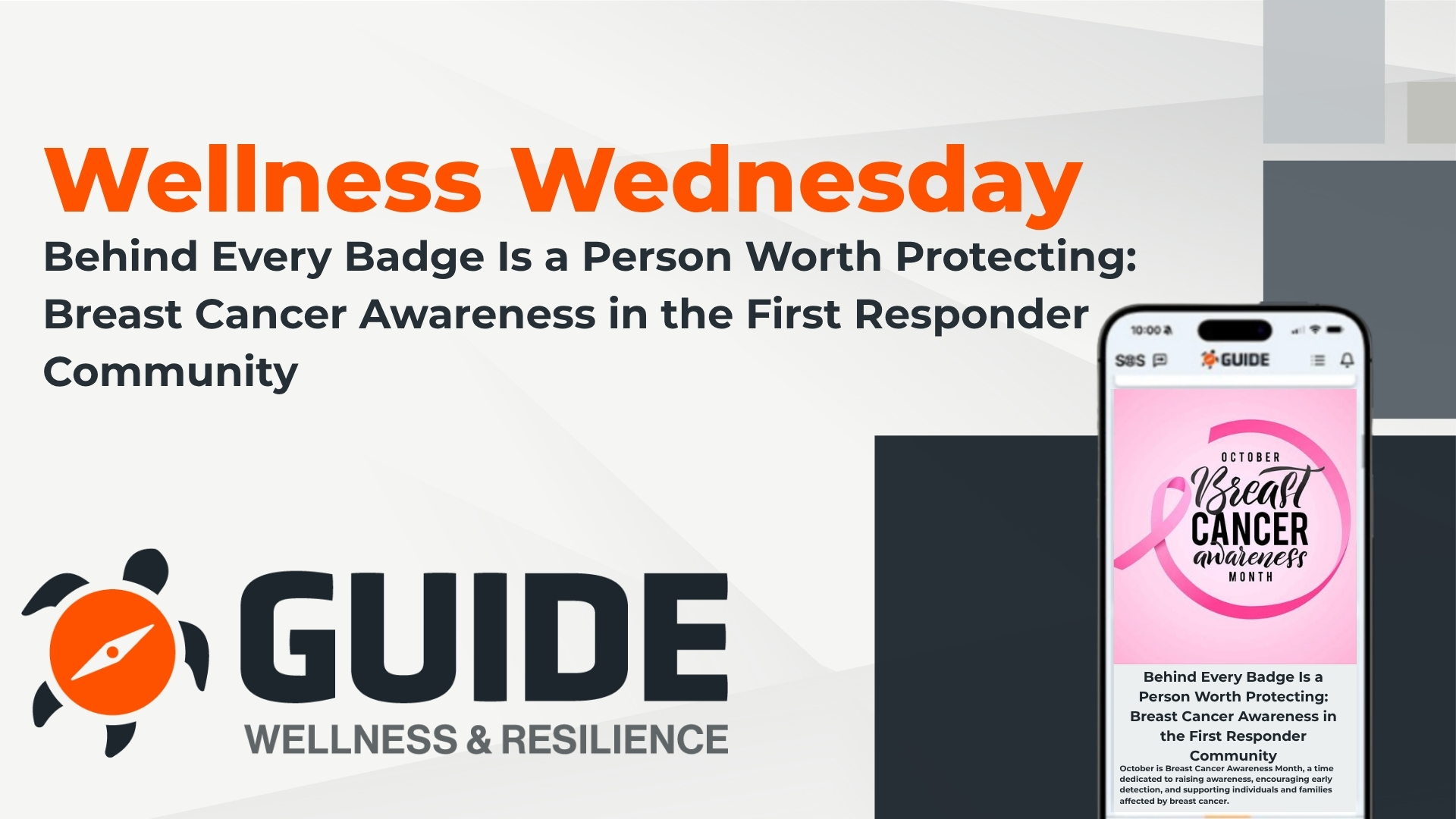
October is Breast Cancer Awareness Month, a time dedicated to raising awareness, encouraging early detection, and supporting individuals and families affected by breast cancer.
For first responders, whose careers revolve around protecting and caring for others, this month serves as an important reminder that their own health and wellness deserve that same level of attention.
Police officers, firefighters, emergency medical personnel, dispatchers, corrections officers, and military personnel often work in physically demanding, high-stress environments. Long shifts, unpredictable schedules, and the responsibility of responding to emergencies can make it difficult to prioritize personal health.
However, a breast cancer diagnosis can affect anyone, including those who spend their lives serving their communities.
This Breast Cancer Awareness Month, The GUIDE App recognizes the first responders facing breast cancer, those navigating recovery, and the colleagues and families standing beside them.
Understanding Breast Cancer in the First Responder Community
Breast cancer is one of the most common cancers affecting women in the United States. Although it is significantly more common in women, men can also develop breast cancer.
According to the American Cancer Society, approximately 2,670 men in the United States are expected to be diagnosed with invasive breast cancer in 2026. This reinforces the importance of making breast cancer awareness part of the conversation for everyone, regardless of gender. American Cancer Society
Within the first responder community, awareness is particularly important because occupational demands can create additional barriers to preventive healthcare.
For example, first responders may encounter challenges such as:
- Unpredictable schedules: Long shifts, overnight assignments, and emergency responsibilities can make scheduling routine medical appointments difficult.
- Physical demands: Jobs requiring strength, endurance, and constant movement can become more challenging during cancer treatment and recovery.
- Mental and emotional stress: Balancing a diagnosis with professional responsibilities can contribute to anxiety, uncertainty, and emotional exhaustion.
- Reluctance to seek support: Individuals accustomed to helping others may struggle to acknowledge when they need help.
- Concerns about returning to duty: Treatment and recovery may raise questions about physical readiness, job responsibilities, and career stability.
These challenges highlight why breast cancer awareness should extend beyond encouraging medical screenings. It should also include conversations about emotional wellness, workplace support, and recovery.
Occupational Exposure and Cancer Risk Among Firefighters
For firefighters, cancer awareness carries an additional occupational health consideration.
Firefighters can encounter hazardous substances through smoke, combustion byproducts, contaminated equipment, and other workplace exposures.
Research from the National Institute for Occupational Safety and Health (NIOSH) has identified higher-than-expected rates of certain cancers among firefighters compared with the general population.
A 2024 scientific review also identified several chemicals associated with breast cancer risk that firefighters may encounter occupationally, including substances found in combustion byproducts, diesel exhaust, and some firefighting foams.
However, researchers are still working to understand the relationship between firefighting and breast cancer specifically. Historically, women have been underrepresented in occupational firefighter cancer studies, making additional research particularly important. CDC
While occupational exposure does not mean a firefighter will develop cancer, understanding potential risks reinforces the importance of preventive healthcare, appropriate protective measures, and ongoing health education.
The Emotional Impact of a Breast Cancer Diagnosis
A breast cancer diagnosis affects more than physical health.
For first responders, the emotional challenges associated with diagnosis and treatment may be especially difficult when combined with an occupation centered on strength, dependability, and helping others.
Someone who is accustomed to managing emergencies may suddenly find themselves facing uncertainty about their own health.
Questions about treatment, recovery, family responsibilities, and returning to work can become overwhelming.
Some individuals may experience feelings of:
- Anxiety and uncertainty: Concerns about treatment outcomes, recovery, and what the future holds.
- Loss of independence: Difficulty adjusting to physical limitations or relying on others for assistance.
- Emotional exhaustion: Managing medical appointments, treatment side effects, and personal responsibilities.
- Isolation: Feeling disconnected from colleagues, normal routines, or workplace responsibilities.
- Changes in identity: Struggling with the transition from being a caregiver or protector to receiving care and support.
These responses can vary from person to person, and there is no single way someone should feel while navigating cancer.
Recognizing these emotional challenges is an important part of supporting overall wellness.
Asking for help is not a sign of weakness. It is an important part of taking care of yourself.
The Importance of Early Detection and Preventive Care
One of the most important messages during Breast Cancer Awareness Month is the value of early detection.
Breast cancer screening can identify cancer before symptoms develop, when treatment may be more effective.
According to the Centers for Disease Control and Prevention (CDC), the U.S. Preventive Services Task Force recommends that women between the ages of 40 and 74 who are at average risk receive a mammogram every two years.
Individuals with a family history of breast cancer, genetic risk factors, or other elevated risks may require a different screening schedule based on recommendations from their healthcare provider. CDC
For first responders, preventive care should be viewed as an essential component of maintaining long-term health and readiness.
Departments and organizations can help encourage preventive healthcare by promoting routine medical appointments, sharing reliable health information, and creating workplace environments where employees feel comfortable prioritizing their health.
Awareness also includes recognizing possible changes in breast health, such as new lumps, changes in breast appearance, nipple discharge, or other unusual symptoms.
Anyone experiencing concerning changes should speak with a healthcare provider rather than waiting for their next routine screening.
Supporting First Responders Through Treatment and Recovery
A cancer diagnosis can create significant changes in someone’s personal and professional life.
For first responders undergoing treatment, the support they receive from colleagues, supervisors, friends, and family members can make a meaningful difference.
Departments can contribute to a supportive environment by recognizing that recovery is not always linear.
Some individuals may return to work relatively quickly, while others may require extended time away, adjustments to their responsibilities, or ongoing support.
Organizations can consider several approaches to supporting members affected by breast cancer.
Encourage open conversations about health and wellness.
Creating an environment where first responders feel comfortable discussing health challenges can help reduce feelings of isolation and encourage individuals to seek appropriate assistance.
Provide flexibility when possible.
Accommodating medical appointments, recovery periods, and temporary changes in physical abilities can help reduce additional stress during treatment.
Recognize emotional wellness as part of recovery.
While physical recovery is important, individuals may also benefit from emotional support, counseling, peer connections, and other wellness resources.
Respect individual privacy and preferences.
Not everyone wants to discuss their diagnosis openly. Departments should allow individuals to determine how much information they wish to share and what type of support they find helpful.
Continue support beyond treatment.
Completing treatment does not necessarily mean the emotional or physical effects of cancer have ended. Continued encouragement and understanding can be valuable throughout recovery and the transition back to everyday life.
Supporting someone through cancer does not always require having the right words. Sometimes, simply listening, checking in, or offering practical assistance can make a difference.
Prioritizing Wellness Beyond the Uniform
First responders dedicate countless hours to protecting their communities.
Whether responding to emergencies, helping individuals in crisis, or supporting colleagues through difficult situations, their work requires resilience and commitment.
However, prioritizing the needs of others should not come at the expense of personal health.
Breast Cancer Awareness Month provides an opportunity to reinforce a broader message within the first responder community: Personal wellness is just as important as professional responsibility.
Maintaining physical health, attending recommended medical appointments, addressing emotional stress, and building strong support systems are all important components of long-term wellness.
For first responders experiencing a serious health challenge, these resources can become especially valuable.
Prioritizing personal health is not stepping away from the commitment to serve others. It is an investment in the ability to maintain a healthier, more sustainable future.
How The GUIDE App Supports First Responder Wellness
At The GUIDE App, we believe that supporting first responders means recognizing the person behind the profession.
A first responder’s wellness journey extends beyond the emergencies they respond to or the responsibilities they carry while on duty.
It includes their physical health, emotional well-being, personal relationships, and the challenges they may face outside of work.
Whether someone is navigating a breast cancer diagnosis, supporting a loved one through treatment, or managing the emotional demands of everyday life, having access to wellness resources and opportunities for self-reflection matters.
The GUIDE App supports first responders through an anonymous wellness platform that encourages them to prioritize their well-being and access resources that promote healthier lives.
While The GUIDE App does not replace medical treatment or specialized cancer support services, it can complement broader wellness efforts by encouraging conversations about mental health, personal well-being, and the importance of seeking support.
Supporting those who serve means recognizing that their health matters, both on and off duty.
This October, Let’s Stand Together
Breast Cancer Awareness Month is more than wearing pink or recognizing a campaign.
It is an opportunity to encourage conversations, promote early detection, acknowledge those affected by cancer, and remind individuals that they do not have to navigate difficult experiences alone.
For first responders, these conversations are especially meaningful.
The same compassion, dedication, and support extended to communities every day should also exist within departments, organizations, and the broader first responder network.
This October, take a moment to check in with yourself, encourage a colleague to prioritize their health, or offer support to someone navigating treatment or recovery.
Behind every badge, uniform, and emergency response is a person whose health and well-being deserve to be protected.
At The GUIDE App, we stand with the first responders and families affected by breast cancer and remain committed to promoting wellness throughout the first responder community.
Because those who protect others deserve care, compassion, and support, too.