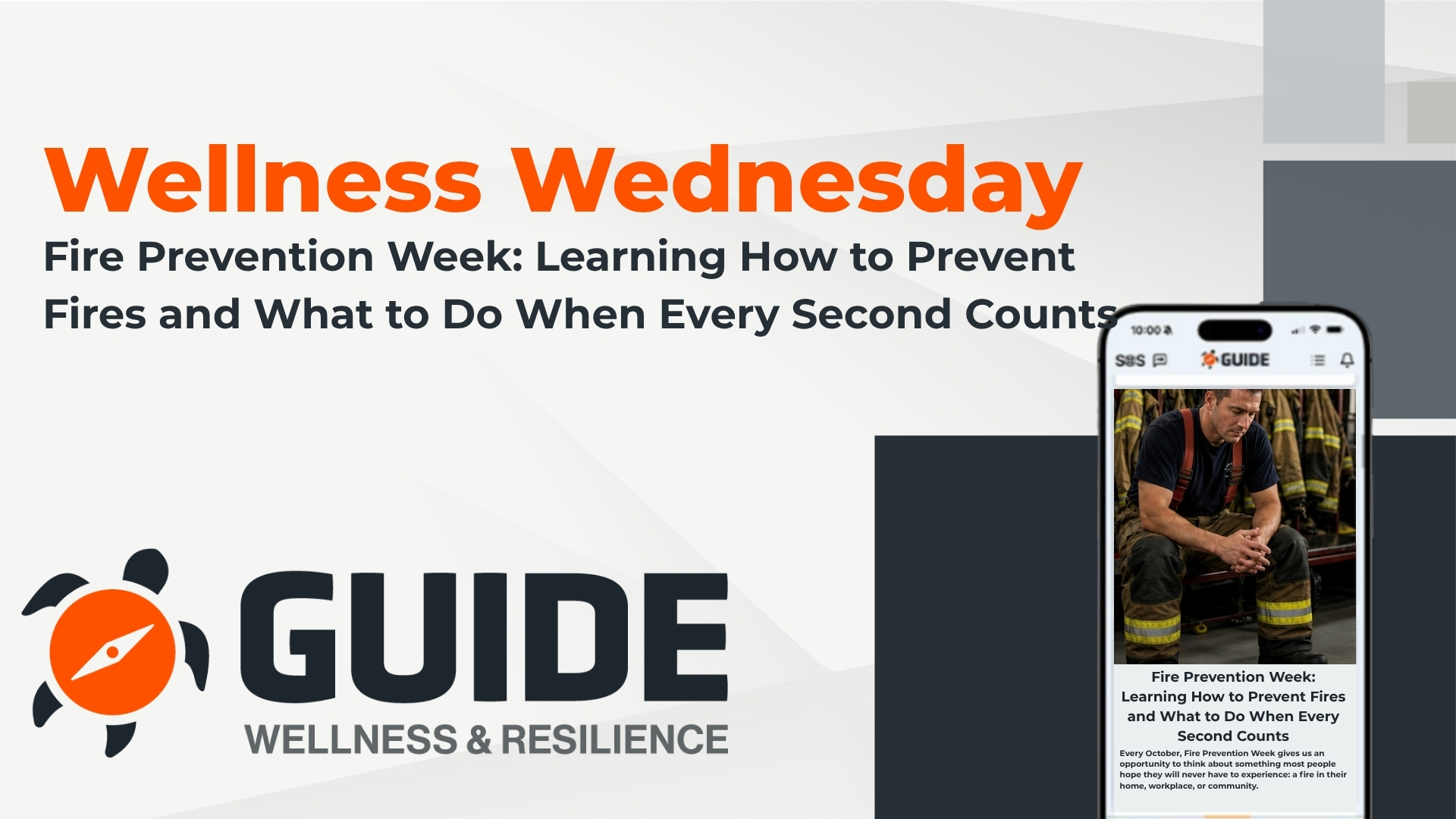
Every October, Fire Prevention Week gives us an opportunity to think about something most people hope they will never have to experience: a fire in their home, workplace, or community. While we may associate fire safety primarily with firefighters, fire departments, alarms, and emergency response, prevention actually begins much earlier. It starts with the everyday decisions we make, the safety habits we practice, and the knowledge we have before an emergency occurs. Understanding how fires can start, recognizing potential hazards, and knowing what to do if a fire occurs can help create safer homes and communities while giving people greater confidence in an emergency.
Fire safety education is not about living in fear of what could happen. It is about becoming prepared for something we hope never happens. In many areas of wellness, preparation helps reduce uncertainty. We learn CPR even though we hope we never need to perform it. We wear seatbelts even though we do not expect to get into a crash. Fire prevention works in much the same way. When we understand the risks around us and have a plan for responding to them, we are better equipped to make decisions when seconds matter. Fire Prevention Week is an important reminder to slow down, look around our environments, and ask a simple question: If a fire happened here, would I know what to do?
Fire Prevention Begins Before There Is Ever an Emergency
One of the most important lessons of fire prevention and fire safety is that prevention often comes down to small actions. Fires do not always begin with an obvious or dramatic hazard. Everyday activities such as cooking dinner, plugging in electronics, charging devices, lighting candles, using portable heaters, or operating appliances can become potential fire risks when something goes wrong or when proper precautions are not taken. Because these activities are so routine, it can become easy to stop thinking about the potential risks associated with them.
Take a few minutes during Fire Prevention Week to look at your home through a fire-safety lens. Are electrical outlets overloaded? Are there damaged or frayed cords still being used? Are extension cords being used as permanent solutions? Are candles located close to curtains, blankets, paper, or other materials that could catch fire? Are portable heaters positioned near furniture or bedding? Are exits easily accessible, or are doors and pathways blocked by clutter? Fire prevention begins by recognizing hazards before they have an opportunity to become emergencies.
This is also a good time to think about how your routines change throughout the year. October marks the beginning of cooler weather in many parts of the country, which means people may begin using fireplaces, portable heaters, electric blankets, candles, and other sources of heat more frequently. Seasonal decorations can also introduce additional electrical cords and potentially flammable materials into the home. Becoming more aware of these changes can help you identify risks that may not have been present during the warmer months.
The Kitchen Deserves Your Attention
The kitchen is one of the most important places to practice home fire safety because cooking involves heat, electricity, gas, oil, and open flames depending on the appliances being used. It only takes a brief distraction for an unattended pan or overheated cooking oil to become dangerous. Staying close to food while it is cooking, keeping towels, paper products, packaging, and other flammable materials away from the stove, and keeping cooking surfaces free of unnecessary clutter are simple habits that can make a meaningful difference.
It is equally important to understand that not every type of fire should be treated the same way. Water should never be poured onto a grease fire. Doing so can cause burning oil to spread and create an even more dangerous situation. If a small pan fire occurs and it can be done safely, turning off the heat and covering the pan with a lid may help smother the flames. However, there is an important distinction between knowing a basic fire-safety technique and putting yourself in danger attempting to control a fire. If flames are spreading, smoke is increasing, or you are uncertain about what to do, your priority should be getting out and calling 911 from a safe location.
That principle applies throughout fire safety: your safety comes before your belongings and your property.
Smoke Alarms Can Give You Critical Time to Act
A working smoke alarm may be one of the simplest fire-safety tools in your home, but it can also be one of the most important. Smoke alarms provide an early warning that something is wrong, potentially giving people additional time to escape before conditions become more dangerous.
During Fire Prevention Week, make testing your smoke alarms part of your routine. Make sure everyone in your household recognizes what the alarm sounds like and understands that it means they need to respond immediately. Check the alarms located near sleeping areas, on different levels of the home, and in other recommended locations. Batteries should be replaced when necessary, and smoke alarms themselves should be replaced according to the manufacturer’s instructions.
It is easy to assume that because an alarm is installed, it will work when you need it. Fire prevention is about replacing that assumption with preparation. Taking a few minutes to test an alarm today can help ensure that an important layer of protection is available if an emergency happens tomorrow.
Create a Fire Escape Plan Before You Ever Need It
Imagine waking up to the sound of a smoke alarm in the middle of the night. The room is dark, you are disoriented, and smoke may make familiar spaces difficult to navigate. That is not the ideal moment to begin figuring out how you are going to leave your home.
A fire escape plan allows those decisions to be made ahead of time. Everyone in the household should understand how they can get outside and where they should meet once they have evacuated. When possible, identify more than one potential exit from rooms and discuss what to do if the normal route is blocked. Families should also consider children, older adults, individuals with disabilities or mobility limitations, and anyone else who may need assistance evacuating.
Your meeting location should be a safe distance away from the building and easy for everyone to identify. It could be a particular tree, mailbox, neighbor’s property, or another permanent landmark. Having a designated meeting point makes it easier to determine whether everyone has escaped and reduces the chance that someone will reenter a dangerous building because they believe another person is still inside.
Practicing the plan matters too. Reading about what to do during a fire is helpful, but physically walking through an escape route can make the plan more familiar. Familiarity may help reduce hesitation and confusion during a real emergency.
What Should You Do If a Fire Actually Happens?
If you discover a fire or hear a smoke alarm, focus on evacuation. Fires can change conditions inside a building quickly, and smoke can make it difficult to see, breathe, and navigate. Instead of spending time collecting personal belongings or attempting to determine exactly what is happening, move toward your planned exit when it is safe to do so.
If you encounter smoke while escaping, staying low may help you avoid some of the heavier smoke and heat above you. Before opening a closed door, carefully check whether it feels hot. A hot door may indicate dangerous conditions on the other side, in which case another escape route should be used if one is available. Once you have safely exited the building, move to your designated meeting location and call 911.
One of the most important fire-safety rules is also one of the most difficult: once you are outside, stay outside.
The instinct to go back inside can be powerful, especially if you realize you left behind something important or believe a pet or another person may still be inside. However, reentering a burning structure can put you in significant danger and potentially create another rescue situation for responding firefighters. Tell firefighters immediately if you believe a person or animal may still be inside and provide any information that could help them.
Your phone, wallet, computer, photographs, clothing, and other belongings may be meaningful, valuable, or difficult to replace. But none of them are worth risking your life.
Know When a Fire Extinguisher Is – and Isn’t – the Answer
Keeping an appropriate fire extinguisher available can be part of a larger fire preparedness plan, but simply owning one does not mean every fire should be fought. Fire extinguishers are intended for specific circumstances and types of fires, and knowing how to properly operate one is just as important as knowing where it is located.
Before attempting to use an extinguisher, you should have a clear path to an exit and be confident that the fire is small and contained enough to address safely. If a fire is growing, smoke is becoming heavy, you are uncertain about the type of fire or extinguisher, or you feel unsafe for any reason, leave.
There can be a natural instinct to think, “I can handle this.” Fire Prevention Week is a good opportunity to challenge that instinct. Knowing when not to intervene is part of being prepared. Emergency responders have specialized equipment, protective gear, training, and experience for situations that can become dangerous very quickly. Getting yourself to safety allows them to focus on controlling the emergency rather than having to rescue someone who stayed behind.
Remember: Stop, Drop, and Roll
Some fire-safety lessons are taught so early in life that we may stop thinking about them as adults, but they remain important. If your clothing catches fire, remember to stop, drop, and roll.
Stop instead of running, drop to the ground, cover your face when possible, and roll back and forth to help extinguish the flames. Running can provide additional oxygen to the flames and make the situation worse.
Fire Prevention Week is a good opportunity for parents and caregivers to review this lesson with children, but adults should refresh their own knowledge too. Fire-safety education should not be something we learn once in elementary school and never think about again.
Fire Preparedness Is Also About Managing Stress
There is another part of emergency preparedness that deserves attention: how we respond mentally when something goes wrong.
During an emergency, fear and stress can affect decision-making. People may freeze, panic, become confused, or instinctively try to retrieve possessions. Preparing in advance cannot eliminate those reactions entirely, but it can reduce the number of decisions that need to be made in the moment.
If you already know where your exits are, where your family will meet, how to call for help, and what you should never go back inside to retrieve, you have created a framework for responding. That is one of the reasons preparedness can be considered part of overall wellness. It gives us tools to respond to uncertainty instead of waiting until a crisis happens to figure out what comes next.
You do not have to spend every day worrying about a possible fire. Preparation is actually about doing the opposite: taking reasonable steps now so you can feel more confident that you know what to do later.
Fire Prevention Week Is Also a Time to Recognize the People Who Respond
For the public, a fire may be one of the most frightening events they ever experience. For firefighters and other first responders, emergencies are part of the job. That does not mean those experiences become easy or that repeated exposure to them does not have an impact.
Firefighters may enter the situations everyone else is trying to escape. They respond to homes, businesses, vehicles, accidents, injuries, loss, and emergencies where circumstances can change within seconds. Behind the protective equipment, training, and responsibility is still a person processing what they have seen and experienced.
That makes firefighter wellness and first responder wellness an important part of the conversation during Fire Prevention Week.
Physical recovery is important, but so is mental and emotional recovery. A difficult call may stay with someone after a shift ends. Stress can build gradually, particularly when there is little time to process one experience before responding to another. Checking in with yourself, recognizing when stress is accumulating, getting adequate recovery when possible, talking with trusted people, and using available wellness resources can all be valuable parts of maintaining long-term resilience.
For first responders who may not feel comfortable discussing everything they experience with another person, having another outlet matters. The GUIDE App provides first responders with access to private, anonymous wellness resources that can be used on their own terms. Sometimes taking even a few minutes to check in, decompress, learn something new, or refocus can be an important part of caring for yourself while continuing to care for others.
This Fire Prevention Week, Take a Few Minutes to Prepare
Fire Prevention Week is not simply about recognizing the dangers of fire. It is about education, awareness, prevention, and preparation. It is an opportunity for all of us to look at the environments where we live and work and consider whether there are small changes we can make today that could protect us tomorrow.
Walk through your home and look for potential fire hazards. Test your smoke alarms. Talk to the people you live with about how you would get outside. Choose a meeting location. Learn how your fire extinguisher works and understand when it is appropriate to use it. Review basic fire-safety practices with your children, family members, roommates, coworkers, or anyone else who may benefit.
Most importantly, remember that fire prevention is not about expecting the worst. It is about being ready to respond if the unexpected happens.
A few minutes of preparation can create knowledge. Knowledge can create confidence. And when an emergency happens, knowing what to do can make all the difference.
This Fire Prevention Week, take the opportunity to learn, prepare, practice, and prevent—and take a moment to recognize the firefighters and first responders who dedicate themselves to protecting their communities every day.
Stay aware. Stay prepared. Stay well.
Supporting Those Who Protect Our Communities
At The GUIDE App, we believe wellness should be accessible to the people who spend their careers caring for others. Our anonymous wellness platform gives first responders a private place to check in, access wellness resources, and take time for their own well-being.
Because preparedness isn’t only about being ready for the next call. It’s also about taking care of the person who answers it.
Learn more about The GUIDE App and how we’re supporting first responder wellness.