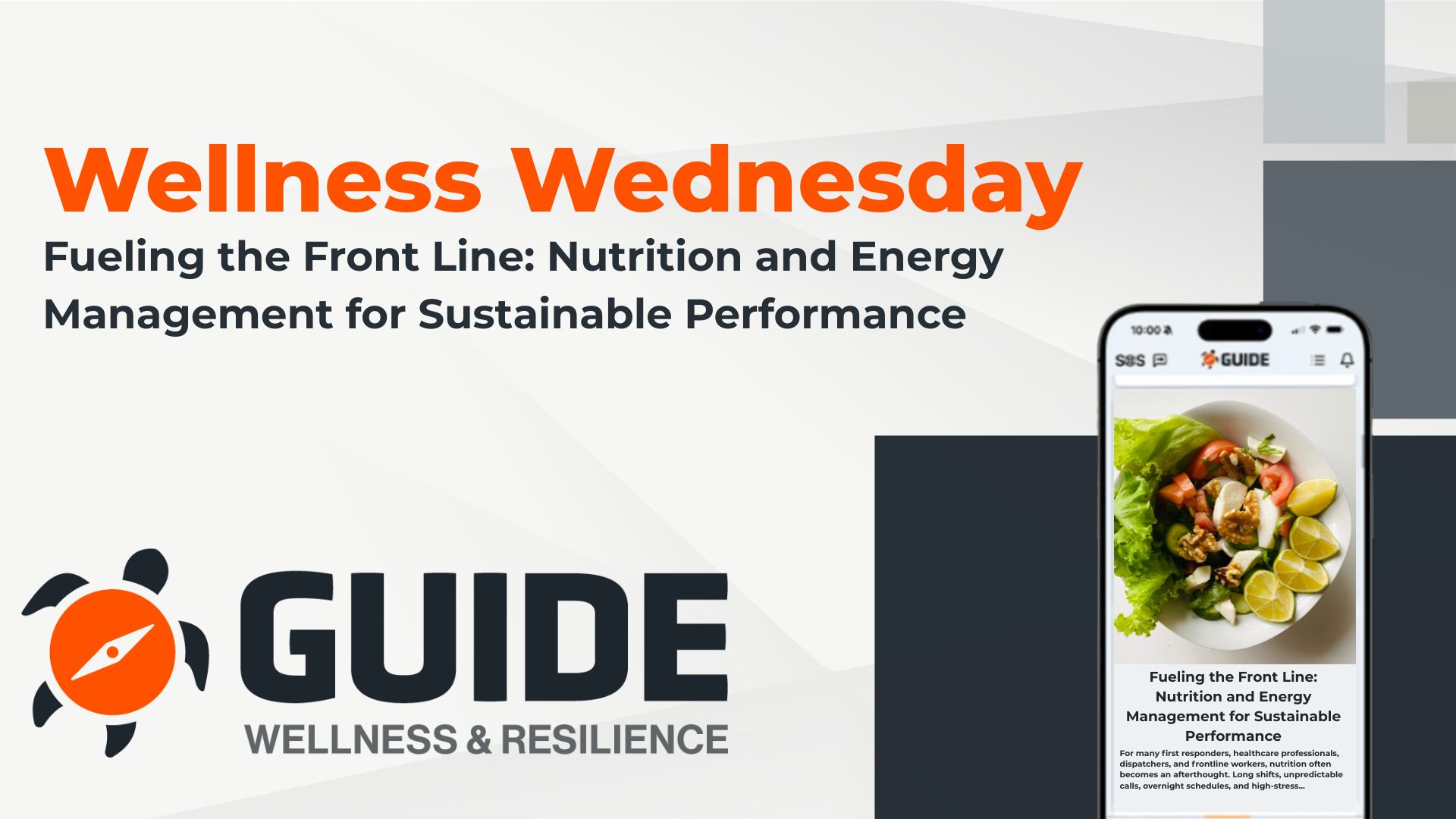
First responder nutrition plays a critical role in maintaining energy, focus, recovery, and long-term health. For many first responders, healthcare professionals, dispatchers, and frontline workers, nutrition often becomes an afterthought. Long shifts, unpredictable calls, overnight schedules, and high-stress environments make it difficult to prioritize balanced meals, hydration, and recovery.
Convenience usually wins because it feels easier in the moment.
However, poor fueling habits can directly impact performance, focus, energy levels, emotional regulation, sleep quality, and overall wellness over time.
At The GUIDE App, we believe wellness is not about perfection or restrictive diets. It is about building sustainable habits that help frontline professionals continue performing at a high level without completely draining themselves in the process. The body cannot operate efficiently without proper fuel, especially in high-demand professions where physical and mental performance matter every day.
First Responder Nutrition and the Reality of Shift Work
Traditional nutrition advice rarely fits the reality of frontline work.
Most first responders are not sitting down for structured meals at the same time every day. Meals get interrupted. Calls come in unexpectedly. Night shifts disrupt hunger signals. Some responders go hours without eating, only to rely on fast food, vending machines, or energy drinks to get through the rest of the shift.
How Shift Work Impacts Nutrition and Performance
Shift work can disrupt:
- Metabolism
- Hunger hormones
- Blood sugar regulation
- Sleep quality
- Digestion
- Energy levels
Eating inconsistently or relying heavily on processed foods can create cycles of fatigue, energy crashes, inflammation, and poor concentration.
The goal is not to eat perfectly. The goal is to fuel consistently enough to support steady performance throughout the shift.
Balanced meals that include protein, healthy fats, fiber, and complex carbohydrates can help stabilize energy levels and reduce the dramatic highs and lows many responders experience during long workdays.
First Responder Nutrition and Energy Crashes
One of the most common challenges among frontline professionals is the mid-shift crash.
It often happens after relying on sugary snacks, energy drinks, excessive caffeine, or highly processed meals that cause blood sugar spikes followed by rapid drops in energy.
Why Blood Sugar Swings Affect Performance
When blood sugar rises quickly, the body releases insulin to bring it back down. That sudden drop can leave responders feeling exhausted, mentally foggy, irritable, and craving even more caffeine or sugar.
Instead of chasing quick bursts of energy, sustainable performance comes from creating more stable fuel throughout the day.
Meals with protein, fiber, and healthy fats digest more slowly and help maintain more consistent energy levels during physically and mentally demanding shifts.
Simple choices like adding protein to breakfast, choosing higher-fiber snacks, or eating smaller, balanced meals throughout the day can help reduce these crashes significantly.
First Responder Nutrition and Caffeine Management
Caffeine is deeply embedded in frontline culture. Coffee, energy drinks, and stimulants often become survival tools during overnight shifts, long hours, and periods of exhaustion.
While caffeine can temporarily improve alertness, it does not replace actual recovery.
Managing Caffeine Without Sacrificing Performance
Many responders unknowingly enter a cycle where they rely on caffeine to overcome exhaustion during the shift, only to struggle sleeping afterward.
Over time, excessive caffeine can contribute to:
- Increased anxiety
- Restlessness
- Elevated heart rate
- Sleep disruption
- Dehydration
- Energy crashes
- Increased nervous system stress
This does not mean responders need to eliminate caffeine.
Instead, the goal is to use it intentionally by:
- Limiting caffeine later in the shift
- Increasing hydration
- Pairing caffeine with food
- Gradually reducing excessive intake
According to the Centers for Disease Control and Prevention (CDC), adequate sleep and recovery remain essential components of workplace performance and fatigue management.
First Responder Nutrition and Meal Prep Strategies
One of the biggest barriers to healthy eating during shift work is convenience.
After long shifts, many responders simply do not have the energy to cook full meals every day.
Practical Meal Prep for Frontline Professionals
Meal prep does not need to be complicated or time-consuming.
Simple meal prep ideas include:
- Pre-cut fruits and vegetables
- Overnight oats for quick breakfasts
- Protein packs with nuts, cheese, or hard-boiled eggs
- Pre-cooked rice or quinoa
- Grilled chicken or lean protein prepared ahead of time
- Wraps, grain bowls, or sandwiches that can be eaten quickly between calls
- Hydration packets or electrolyte drinks are packed before the shift
Having accessible options available reduces the likelihood of relying solely on convenience store snacks or fast food during busy shifts.
First Responder Nutrition and Hydration Strategies
Hydration is one of the simplest but most overlooked parts of operational performance.
Many responders spend entire shifts drinking coffee, energy drinks, or soda while unintentionally neglecting water intake.
Why Hydration Matters for Frontline Performance
Even mild dehydration can affect:
- Focus
- Cognitive performance
- Reaction time
- Mood
- Physical endurance
- Recovery
- Headache frequency
Hydration needs also increase significantly during warmer months and summer operations.
Simple Hydration Habits for Frontline Workers
- Carry a reusable water bottle during a shift
- Drink water consistently instead of all at once
- Add electrolytes during long or physically demanding shifts
- Balance caffeine intake with additional water
- Monitor urine color as a hydration indicator
- Increase fluids before outdoor operations or heat exposure
Hydration is not only about physical performance. Proper hydration also supports mental clarity and nervous system regulation during high-stress situations.
First Responder Nutrition During Summer Operations
Summer can create additional challenges for frontline professionals.
Higher temperatures, increased outdoor activity, heavier sweating, and physical gear can accelerate dehydration and exhaustion quickly.
Summer Wellness Readiness Tips
Summer wellness readiness means preparing proactively rather than reacting once exhaustion sets in.
This includes:
- Increasing hydration before shifts begin
- Prioritizing electrolyte replacement during hot weather
- Wearing breathable recovery clothing off shift
- Focusing on nutrient-dense meals that support recovery
- Limiting excessive alcohol intake
- Paying attention to early signs of heat exhaustion
- Creating intentional recovery time after physically demanding shifts
The National Institute for Occupational Safety and Health (NIOSH) Heat Stress Resource Center provides additional guidance on hydration, heat exposure, and workplace safety.
Sustainable Performance Starts With First Responder Nutrition
Frontline professionals spend their careers taking care of others, often while neglecting their own physical needs in the process.
But sustainable performance requires sustainable fuel.
First responder nutrition, hydration, energy management, and recovery are not extra wellness conversations. They directly impact operational readiness, emotional resilience, cognitive performance, and long-term health.
The goal is not perfection. The goal is consistency, awareness, and building habits that support the responder behind the badge in the long run.
At The GUIDE App, we believe protecting the mission starts with protecting the people carrying it every day.