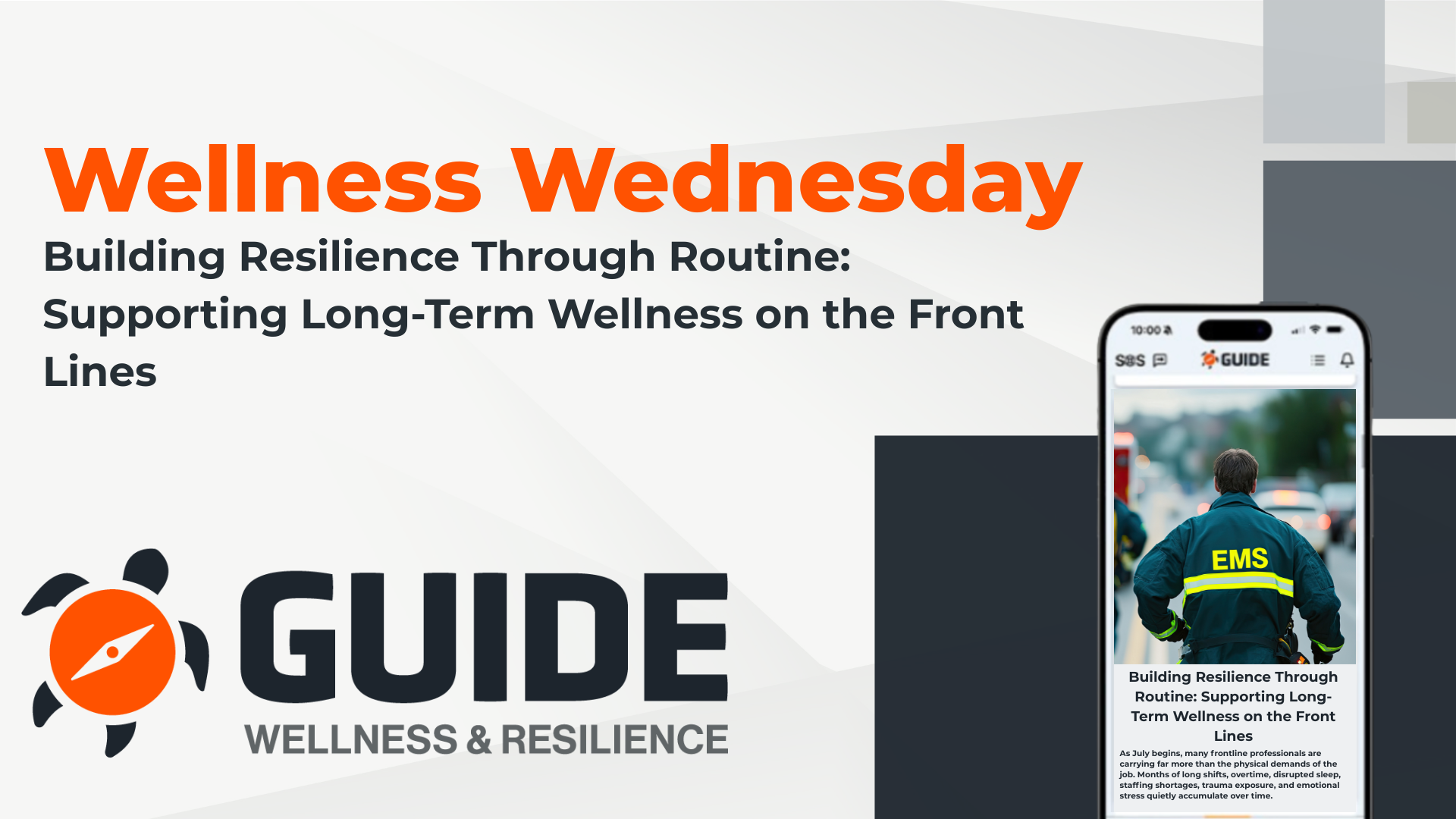
As July begins, many frontline professionals are carrying far more than the physical demands of the job. Months of long shifts, overtime, disrupted sleep, staffing shortages, trauma exposure, and emotional stress quietly accumulate over time. While first responders are trained to continue pushing forward regardless of circumstances, operating in constant survival mode without adequate recovery eventually impacts performance, health, and overall well-being.
At The GUIDE App, we believe resilience isn’t built through burnout or by simply “pushing through.” True resilience is built through consistent routines, intentional recovery, and support systems that allow responders to sustain both their mental and physical health throughout their careers.
July is the perfect opportunity to reset the conversation around wellness and focus on building resilience through routine.
Consistency Creates Sustainable Performance
One of the biggest misconceptions surrounding wellness is that meaningful change requires drastic lifestyle overhauls. For frontline professionals, perfection isn’t realistic. Calls interrupt meals. Shift schedules change without notice. Sleep is unpredictable, and stress is often unavoidable.
That is why consistency matters far more than perfection.
Small habits practiced consistently often produce greater long-term benefits than extreme routines that are impossible to maintain.
Simple actions such as:
- Staying hydrated throughout the shift
- Taking a short walk after work
- Practicing controlled breathing between calls
- Prioritizing quality sleep whenever possible
- Taking a few intentional minutes to decompress
They may seem small individually, but together they help regulate the nervous system, reduce the effects of chronic stress, and improve long-term resilience.
The body responds to repeated patterns. The more recovery becomes part of everyday life, the more sustainable performance becomes throughout an entire career.
Recovery Should Never Be an Afterthought
Many responders spend years prioritizing operational readiness while placing recovery at the bottom of the list. Eventually, the body begins signaling that it can no longer maintain that pace.
Burnout rarely appears overnight. Instead, it often develops gradually through symptoms such as:
- Persistent fatigue
- Emotional numbness
- Increased irritability
- Difficulty concentrating
- Sleep disruption
- Feeling mentally overwhelmed
Recovery should begin long before exhaustion takes over.
Long-term recovery habits support emotional regulation, nervous system recovery, physical resilience, and clearer decision-making under pressure. These habits include improving hydration, maintaining healthier sleep routines, moving consistently, practicing stress management techniques, limiting unhealthy coping mechanisms, and intentionally disconnecting from work after every shift.
The goal isn’t to eliminate stress. Frontline work will always involve unpredictability.
The goal is to become better at recovering from that stress.
Lessons from Dr. Steven Winiarski: Optimizing Men’s Health Through Daily Habits
During our recent webinar, “Optimizing Men’s Health,” Dr. Steven Winiarski of Veo Health reinforced a message that closely aligns with The GUIDE App’s wellness philosophy: long-term health isn’t built through quick fixes; it is built through consistent habits.
Some of the key takeaways included:
Prioritize Preventive Care
Many men delay healthcare until symptoms become difficult to ignore. Regular blood work, annual physicals, and proactive screenings can identify concerns long before they become major health issues.
Preventive care is an investment in long-term readiness.
Build a Strong Foundation First
Before considering supplements or advanced health interventions, responders should focus on the fundamentals:
- Consistent sleep
- Balanced nutrition
- Daily hydration
- Regular physical activity
- Stress management
These foundational habits have the greatest impact on energy, recovery, hormone health, cognitive function, and overall performance.
Nutrition Fuels Performance
Dr. Winiarski emphasized that food is fuel.
Proper nutrition supports:
- Sustained energy throughout long shifts
- Muscle recovery
- Immune health
- Hormonal balance
- Mental clarity
- Reduced inflammation
Making intentional nutrition choices helps responders perform better both on and off duty.
Recovery Is Part of Peak Performance
High performers often focus heavily on training while overlooking recovery.
Quality sleep, proper hydration, movement, and stress reduction aren’t signs of slowing down—they’re essential components of maintaining operational readiness for years to come.
Resetting Both Mind and Body
One of the biggest challenges responders face isn’t simply managing stress on the job, it’s leaving that stress at work.
Although the shift may end physically, the nervous system often remains activated long afterward.
Without intentional decompression, stress follows responders home, affecting sleep, relationships, emotional regulation, and overall quality of life.
Creating a simple post-shift routine helps signal to the brain that the threat environment has ended.
Examples include:
- Changing out of uniform immediately after the shift
- Taking a short walk before entering the house
- Stretching or light mobility work
- Taking a shower after work
- Listening to calming music during the drive home
- Reducing screen time before bed
- Practicing guided breathing exercises
Over time, these routines help improve emotional recovery while creating healthier separation between work and personal life.
Strong Teams Build Stronger Resilience
Frontline professions thrive on teamwork, yet wellness is often approached individually and silently.
Many responders feel pressure to appear unaffected by stress, even when they’re struggling internally.
Changing that culture starts with small acts of accountability.
Support can look like:
- Checking on a teammate after a difficult call
- Encouraging hydration and nutrition during long shifts
- Recognizing signs of emotional exhaustion
- Having honest conversations about stress and recovery
- Supporting one another outside of emergencies
The healthiest departments aren’t those pretending stress doesn’t exist.
They’re the ones willing to support each other through it.
How The GUIDE App Supports Long-Term Wellness
Building resilience becomes significantly easier when responders have practical tools designed specifically for the realities of frontline work.
The GUIDE App was built for first responders, veterans, and frontline professionals who experience operational stress every day.
Rather than promoting unrealistic wellness expectations, the platform delivers evidence-based resources that fit into demanding schedules.
The GUIDE App helps support individuals and departments through:
- Guided wellness and recovery resources
- Daily stress management tools
- Nervous system regulation exercises
- Mental wellness education
- Burnout prevention strategies
- Habit-building programs
- Team wellness initiatives
- Evidence-based resilience education
By normalizing conversations around mental wellness and recovery, departments can strengthen morale, improve retention, reduce burnout, and better support long-term operational readiness.
Resilience Is Built One Day at a Time
Resilience isn’t something responders either possess or lack.
It is built through thousands of small decisions made consistently over time.
The strongest responders aren’t necessarily those who ignore stress the longest. They are the ones who understand how to recover effectively, support their teammates, prioritize preventive health, and create routines that sustain both their careers and their lives.
As July begins, take this opportunity to evaluate the habits that protect the mind and body behind the badge.
Whether it’s improving hydration, scheduling preventive healthcare, prioritizing sleep, practicing stress management, or taking five intentional minutes to reset after every shift, small actions repeated consistently create lasting change.
At The GUIDE App, our mission is to help frontline professionals build realistic wellness strategies that strengthen resilience, improve operational readiness, and support healthier teams.
Because protecting the mission starts with protecting the people who carry it every day.