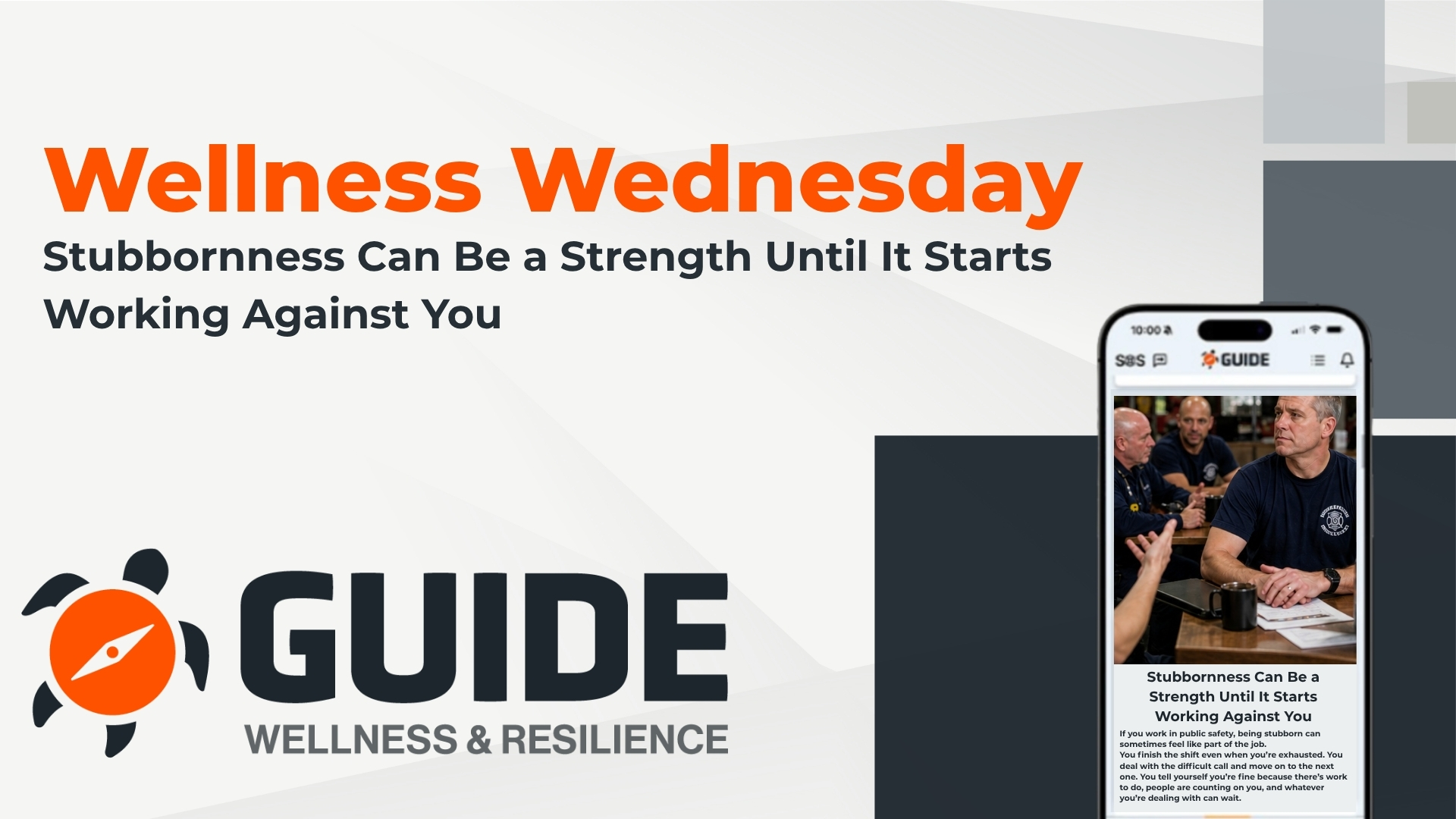
If you work in public safety, being stubborn can sometimes feel like part of the job.
You finish the shift even when you’re exhausted. You deal with the difficult call and move on to the next one. You tell yourself you’re fine because there’s work to do, people are counting on you, and whatever you’re dealing with can wait.
That determination can be a strength.
But sometimes, “I can handle it” turns into “I have to handle everything on my own.”
And that’s when stubbornness can start taking a toll.
How Often Do You Say, “I’m Fine”?
Maybe you’ve had a rough shift.
Maybe you haven’t slept well in days.
Maybe something happened on a call that you keep replaying in your head.
Or maybe nothing major happened at all—you’re just tired, stressed, irritated, and not feeling like yourself.
Someone asks how you’re doing.
“I’m fine.”
Sound familiar?
For first responders, pushing through difficult situations can become second nature. Police officers, firefighters, EMS professionals, corrections officers, 911 professionals, and veterans are used to operating under pressure.
You learn how to keep moving.
But your mind and body still keep track of the stress you’re carrying.
Stress Doesn’t Always Look Like Stress
Stress doesn’t necessarily mean you’re sitting there thinking, I’m stressed.
Sometimes it looks like being irritated by things that normally wouldn’t bother you.
It might be struggling to fall asleep after a long shift, waking up exhausted, having trouble focusing, feeling tense, withdrawing from people, or realizing you haven’t really felt like yourself lately.
You might even recognize that something is bothering you and still think:
I’ll deal with it later.
It’s not that serious.
Other people have it worse.
I can handle it.
That mindset might get you through today.
But if today turns into weeks or months of pushing things aside, that stress can start adding up.
Your Body Feels It, Too
Mental stress doesn’t always stay mental.
Long periods of stress can affect sleep, energy, concentration, mood, and physical tension. You might notice headaches, tight shoulders, exhaustion, changes in your routine, or simply feeling like you can never completely shut your brain off.
That doesn’t mean you suddenly need to completely change your life.
It might just mean you need to check in with yourself.
But What If You Don’t Want to Talk About It?
Here’s the thing: you don’t have to.
Talking to someone can be incredibly valuable, but sometimes you’re simply not ready for that conversation.
Maybe you don’t know what you want to say.
Maybe you don’t want someone asking questions.
Maybe you want to figure out how you’re feeling first.
Or maybe you just want a place where you can be honest without worrying about who knows what you said.
That’s exactly why having different wellness outlets matters.
An Anonymous Space Built for First Responders
The GUIDE App gives first responders a private, anonymous way to make wellness part of their everyday routine.
You can check in with yourself, explore wellness resources, participate in the community, and see what other first responders are experiencing—all without having your identity attached to what you share.
Other members don’t know who you are.
You don’t know who they are.
That means you can show up as yourself.
Had a terrible shift?
Say it.
Haven’t been sleeping?
Talk about it.
Frustrated about something at work?
Get it off your chest.
Having a great day and want to share something positive?
Do that, too.
Wellness doesn’t have to start with a crisis. It can start with simply having somewhere to go when you need a minute.
Give Yourself 15 Minutes
Think about how much of your shift is spent taking care of everyone else.
Now ask yourself:
When was the last time you gave yourself 15 minutes?
Not 15 minutes scrolling through your phone.
Not 15 minutes thinking about everything you have to do tomorrow.
Fifteen minutes intentionally focused on you.
Check in with your mood.
Think about how you’ve been sleeping.
Recognize your stress level.
Explore a wellness course.
Read what other first responders are talking about.
Take a breath.
Reset.
Then move forward with a little more awareness of how you’re actually doing.
Being Strong Doesn’t Mean Ignoring Yourself
There’s nothing wrong with being stubborn.
That determination may be part of what makes you good at what you do.
But there’s a difference between being resilient and refusing to acknowledge when something is weighing on you.
You don’t have to wait until you’re completely burned out to prioritize your wellness.
You don’t have to have everything figured out.
And you don’t have to explain yourself to anyone before deciding that you need a few minutes for yourself.
Sometimes the strongest thing you can do is simply stop saying “I’m fine” long enough to ask:
Am I, really?
Your 15 Minutes Starts Here
You show up for your community, your department, your crew, and the people who depend on you.
Make sure you’re showing up for yourself, too.
The GUIDE App gives police, fire, EMS, corrections, 911 professionals, military members, and veterans access to anonymous wellness resources designed with the first responder community in mind.
Take 15 minutes today. Check in. Explore a resource. Join the conversation. Reset and refocus.
Your wellness doesn’t have to wait until something is wrong.