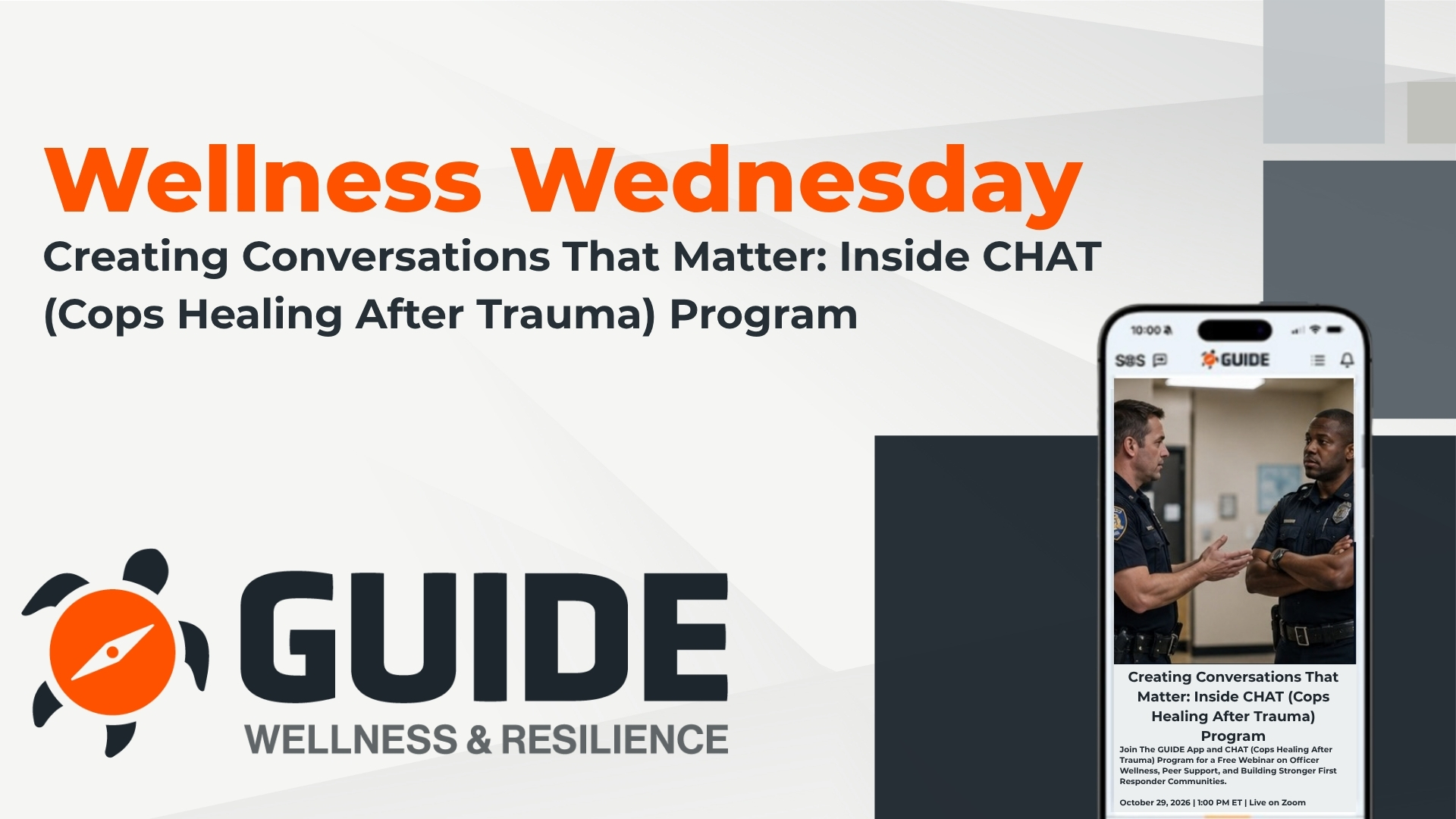
October 29, 2026 | 1:00 PM ET | Live on Zoom
First responders dedicate their careers to protecting communities, responding to emergencies, and supporting people during some of life’s most difficult moments. Yet behind every uniform is an individual who also experiences stress, emotional challenges, and the cumulative effects of a demanding profession.
For law enforcement officers, firefighters, EMS professionals, 911 dispatchers, and other public safety personnel, maintaining mental and emotional well-being is an important part of long-term health and resilience. While departments continue investing in operational training, equipment, and public safety initiatives, conversations surrounding personnel wellness are becoming an increasingly important part of organizational planning.
But how can departments create environments where these conversations happen naturally? How can first responders feel more comfortable discussing the challenges they face? And what can organizations do to make wellness resources more accessible to their teams?
The GUIDE App is proud to welcome Janean Brown of the CHAT (Cops Healing After Trauma) for a free educational webinar on Thursday, October 29, 2026, at 1:00 PM Eastern Time.
This live conversation will explore the Police Department’s Cops Healing After Trauma (CHAT) initiative, the importance of peer support, and how other first responder organizations can begin developing meaningful wellness conversations within their own departments.
Understanding the Importance of Mental Wellness in First Responder Organizations
First responders regularly encounter situations that require quick decisions, emotional control, physical endurance, and the ability to remain focused under pressure. From responding to traumatic incidents and managing emergencies to navigating staffing challenges and unpredictable schedules, these responsibilities can create significant occupational stress.
While a single critical incident may have an immediate emotional impact, the effects of repeated exposure to stressful situations can also accumulate over time.
According to the National Institute for Occupational Safety and Health (NIOSH), public safety professionals face increased occupational exposure to traumatic events and stress. The agency emphasizes the importance of comprehensive mental health programs that incorporate resilience, stress management, organizational support, and healthy coping strategies. CDC
These challenges do not always end when a shift is over. The emotional demands of first responder work can influence sleep, relationships, recovery, and overall well-being.
For department leaders, addressing these concerns requires more than providing resources after a critical incident. It also means considering how wellness education, communication, and support can become ongoing components of organizational culture.
Creating opportunities for meaningful conversations is one way departments can begin strengthening their approach to personnel wellness.
When individuals feel comfortable discussing their experiences, asking questions, and learning about available resources, departments can help create an environment where wellness is recognized as an important part of professional and personal well-being.
Inside Cops Healing After Trauma (CHAT) Program
The Police Department has developed initiatives to support the health and wellness of its personnel, including Cops Healing After Trauma (CHAT).
CHAT creates opportunities for officers to participate in conversations about the experiences, challenges, and emotional demands associated with law enforcement work.
The program provides a setting for reflection, self-care, and discussions about topics relevant to officer wellness, including post-traumatic stress and work-life balance.
According to the Philadelphia Police Foundation, its support of CHAT has helped provide eight annual sessions over the past three years, reaching more than 1,500 participants. These sessions create opportunities for officers to explore wellness-related topics and engage in conversations that may not always arise during routine operational training. Philadelphia Police Foundation
Programs like CHAT recognize that supporting mental wellness involves more than responding to an immediate crisis. It also involves creating opportunities for education, connection, and greater awareness of the resources available to department personnel.
Rather than relying exclusively on formal interventions, initiatives centered on conversation can encourage employees to reflect on their experiences and better understand the importance of maintaining their well-being throughout their careers.
During our upcoming webinar, Janean Brown will provide a closer look at how CHAT operates within the Philadelphia Police Department, the key areas addressed through the program, and the role these discussions can play in supporting personnel.
Attendees will also learn how departments interested in establishing similar initiatives can begin considering their own wellness needs, organizational structure, and available resources.
How Peer Support Complements Departmental Wellness Programs
One important aspect of building a comprehensive first responder wellness strategy is recognizing that individuals may benefit from different types of support.
Some personnel may feel comfortable speaking with a mental health professional, while others may initially prefer connecting with a colleague who understands the realities of their profession.
Peer support programs provide an additional opportunity for individuals to discuss personal and professional challenges with trained colleagues who share an understanding of the first responder experience.
The Philadelphia Police Department has established a Peer Support Program that provides employees with access to trained peer mentors from different backgrounds, ranks, districts, and assignments.
According to the department, its Peer Support Program includes trained mentors, wellness resources, and support availability across shifts. It complements existing services, including the Employee Assistance Program and CHAT, as part of the department’s broader approach to employee wellness. Philadelphia Police Department
Although CHAT and the department’s Peer Support Program are distinct initiatives, they contribute to the same broader goal: making employee wellness resources more accessible and encouraging a culture of support.
This layered approach is particularly relevant for first responder organizations because wellness needs can vary significantly from person to person.
One employee may be navigating the emotional effects of a difficult call, while another may be managing ongoing occupational stress, family responsibilities, or challenges outside the workplace.
Providing multiple pathways to support allows departments to recognize those differences rather than expecting every employee to seek help in the same way.
Peer support is not intended to replace professional mental health care. Instead, appropriately trained peer supporters can provide an additional connection point, encourage conversations, and help individuals identify other resources when needed.
For department leaders interested in expanding their wellness initiatives, understanding how programs such as CHAT and peer support can work alongside existing services is an important part of the conversation.
Why Creating Conversations Around Wellness Matters
In public safety professions, personnel are trained to remain composed, respond effectively, and support others during challenging situations.
Those expectations are essential to their professional responsibilities, but they can also make it difficult for individuals to recognize when they need support themselves.
Concerns about judgment, confidentiality, professional reputation, or potential career consequences may discourage some first responders from discussing mental health challenges.
Research and guidance from the U.S. Department of Justice recognize these concerns as potential barriers to participation in law enforcement peer support programs. The department emphasizes the importance of training, confidentiality policies, ethical standards, and clear communication when establishing peer support initiatives.
This is why creating opportunities for open communication matters.
Wellness conversations do not always have to begin with someone experiencing a crisis. They can begin with education, sharing experiences, discussing everyday stressors, and helping employees recognize that resources are available.
For first responder organizations, normalizing these conversations can help establish a foundation for greater awareness and ongoing engagement with wellness initiatives.
Department leaders also play an important role in creating this environment.
When leadership prioritizes wellness education, communicates the availability of support resources, and encourages participation in appropriate programs, it helps reinforce the message that personnel well-being deserves continued attention.
Wellness should not be viewed solely as a response to difficult circumstances. It should be part of an organization’s ongoing commitment to the people who serve.
What Other First Responder Departments Can Learn From CHAT
Every first responder organization operates within a different environment.
Department size, available funding, staffing structures, organizational culture, and existing wellness resources can all influence how support programs are developed and implemented.
A large metropolitan police department may have access to dedicated wellness personnel and established peer support teams, while a smaller department may need to begin with more limited resources.
However, meaningful conversations around wellness do not necessarily require organizations to begin with a large or complex initiative.
They can begin by understanding the challenges personnel experience, identifying gaps in existing resources, and exploring opportunities to create additional support.
For departments considering a program inspired by CHAT, several questions are worth exploring:
- What wellness challenges are personnel experiencing within our organization?
- What resources are already available, and how effectively are they communicated?
- Are there opportunities to introduce structured discussions around stress, resilience, recovery, and overall well-being?
- How can department leadership encourage participation while respecting privacy and individual needs?
- What training, partnerships, and professional resources would be necessary to support a new initiative?
These considerations can help departments begin evaluating what an internal wellness conversation program might look like for their teams.
During the webinar, Janean Brown will share insight into the structure of CHAT, how the Police Department incorporates these discussions, and considerations for organizations interested in developing similar programs.
The goal is not to suggest that every department should adopt an identical model. Rather, it is to provide an opportunity for first responder leaders to learn from an existing initiative and consider which approaches may be relevant to their own organizations.
Join Our Free Webinar: Creating Conversations That Matter
To continue the conversation around proactive first responder wellness, The GUIDE App is hosting a free webinar featuring Janean Brown of CHAT (Cops Healing After Trauma).
Creating Conversations That Matter: Inside CHAT Program
Date: Thursday, October 29, 2026
Time: 1:00 PM Eastern Time | 12:00 PM Central Time
Location: Virtual via Zoom
Cost: Free Registration
During this educational session, attendees will have the opportunity to learn directly from Janean about her experience with the Police Department and her involvement with CHAT.
Topics we’ll explore include:
Understanding the CHAT Program
- Learn about the purpose of Cops Healing After Trauma and how the initiative fits into the Police Department’s broader approach to employee wellness.
Exploring the Program’s Key Areas
- Discover the key topics addressed through CHAT and why conversations surrounding mental health, resilience, and personal well-being are important within law enforcement organizations.
Creating Opportunities for Meaningful Conversations
- Explore how structured wellness discussions can help departments encourage greater awareness, reflection, and connection among personnel.
Building Similar Initiatives Within Other Departments
- Gain insight into considerations for developing an internal wellness conversation program, including organizational planning, available resources, and opportunities for department participation.
Live Questions and Answers
- The webinar will conclude with an open Q&A, giving attendees an opportunity to ask Janean questions about CHAT, its implementation, and what a similar approach could look like within their own departments.
Whether you’re a police chief, fire chief, EMS leader, 911 communications supervisor, wellness coordinator, peer support professional, or another first responder leader, this conversation offers an opportunity to explore approaches to supporting employee wellness.
Register for the Free Webinar
Visit our events page to reserve your spot and learn more about the upcoming session.
Continuing the Commitment to First Responder Wellness
Supporting first responder wellness requires an ongoing commitment from organizations, leadership teams, and the people who serve within them.
While access to resources is essential, ensuring personnel know those resources exist and feel comfortable exploring them is equally important.
Programs such as CHAT demonstrate how departments can create additional opportunities for wellness education and meaningful conversations that complement existing support systems.
These efforts contribute to a broader understanding of wellness as something that deserves attention throughout a first responder’s career, not simply following a critical incident.
At The GUIDE App, we believe in the importance of proactive, accessible wellness resources that support the unique needs of first responders.
Our anonymous, clinically validated wellness platform provides practical tools designed to help personnel manage stress, build resilience, and prioritize their overall well-being.
GUIDE is designed to complement existing departmental resources, including peer support programs, employee assistance programs, wellness teams, and other professional support services.
By continuing to share educational opportunities and highlight initiatives such as CHAT, we hope to encourage conversations that help departments explore additional ways to support their personnel.
Because creating healthier first responder organizations begins with recognizing the importance of the people behind the uniform.
We look forward to welcoming Janean Brown and the first responder community to this important discussion on October 29.